Experience an AI Sample Lesson with the University of Strathclyde!

Natural Language Processing: How Can AI Understand the Written Word?

Ever wondered how Artificial Intelligence understands human language?

Join the University of Strathclyde for a live, interactive sample lesson exploring Natural Language Processing (NLP), the technology that helps computers understand and work with human language.

Through demonstrations and interactive coding activities using Google Colab, you'll experience what learning AI at university can actually feel like.

DateThursday, 15 October 2026
Time5:00 PM to 6:00 PM (Saudi Arabia)
WhereOnline via Google Meet
FeeFree Registration

What You'll Learn

During this interactive lesson, you'll explore:

  1. What Natural Language Processing is and how it is used in the modern world.
  2. Common tools and techniques used to process human language.
  3. How different techniques can be combined to perform more complex language processing tasks.
No previous programming experience required!

This interactive lesson is designed to introduce students to Natural Language Processing through accessible explanations, demonstrations and guided coding activities.

For the best experience, join using a laptop or desktop computer to participate in the interactive Google Colab activities.

Register Now

Meet the Instructors

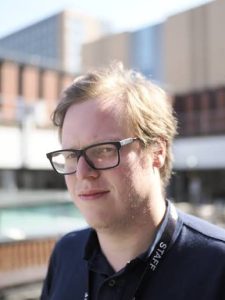
Dr Lee Clift

Dr Lee Clift

Teaching Fellow, University of Strathclyde

View profile

A Teaching Associate in Computing and Information Technology with over a decade of experience in different education sectors. A track record of scholarly publication within Higher Education, targeting computing education.

My interests lie within higher education teaching, both inside and outside institutions. Specifically, they fall into two broad categories: the use of emerging, adopted technology to create authentic assessments for learners and effective outreach within STEM for compulsory education.

Regarding emerging technology, my current research focuses on adapting Generative AI into authentic assessments within computing and computer science. The software industry has requested that more graduates be trained directly and indirectly in the appropriate usage of Generative AI within computing, but with such an emerging and rapidly changing technology, it is important that it is implemented in the correct and responsible way.

Outreach can be a very powerful tool for empowering young members of communities and inspiring them into careers they never considered – computer science has long been thought of as a way for many to gain social mobility. The major issue is how outreach is commonly used as a tool for marketing, not for its primary goal of empowerment, inspiration, and social good. I aim to investigate how this can be done more responsibly and ensure all the benefits of Outreach can be used to aid those who need it.

Dr Martin Goodfellow

Dr Martin Goodfellow

Senior Teaching Fellow, University of Strathclyde

View profile

Senior Teaching Fellow in Computer and Information Sciences at the University of Strathclyde

I'm Director of Undergraduate Teaching and Deputy Group Lead of the Computer Science Education Research Group. I was previously course director of the BSc (Hons) Digital and Technology Solutions Degree Apprenticeship.

I also teach software engineering, software architecture and object orientated programming. Additionally, I also manage outreach activities with schools and other universities.

My primary research interests lie in computer science education, particularly in database education, programming education, and the ways GenAI can influence or enhance CS education. I also maintain research interests in data/database systems, data science and artificial intelligence.

Background

I obtained a First Class BSc (Hons) in Software Engineering from the University of Glasgow in 2008. Subsequently, I obtained a PhD in Computer Science from the University of Strathclyde in 2014 with a thesis titled "Algebraic Methods for Incremental Maintenance and Updates of Views within XML Databases".

Throughout my PhD I co-founded CoderDojo Scotland, which is part of a global collaboration that provides free coding clubs to young people.

Out with the university I have developed and delivered educational computer science content and workshops for organisations worldwide, including Google, Oracle, Glasgow Life, Makeblock and the BBC. I've also written several books on Python programming.